
BLOG
Knowledge Management Insights
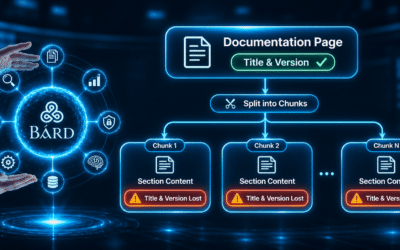
How to prepare your documentation for AI: a readiness checklist
To prepare documentation for AI, make sure every page is current, consistent, self-contained, clearly titled, correctly permissioned and owned by someone. AI assistants retrieve and summarize what you have written, so the work is mostly about the content, not the...
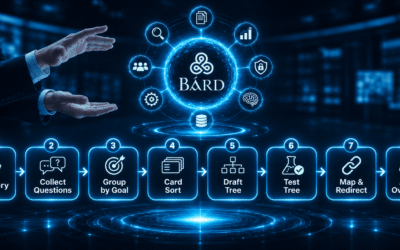
Information architecture for documentation: a practical guide
Information architecture for documentation is the way you organize, label and connect content so people can find the answer they came for. Good documentation IA is built around the questions users arrive with, not around your org chart or your product's internal...
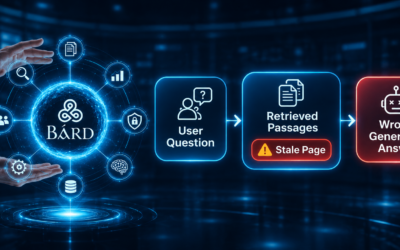
Why your AI chatbot gives wrong answers (and how to fix the knowledge base)
Often, your AI chatbot gives wrong answers because the content it retrieves is wrong, outdated, contradictory or incomplete. The model is doing what it was built to do: find the most relevant text and summarize it with confidence. Teams who ask why their AI chatbot...
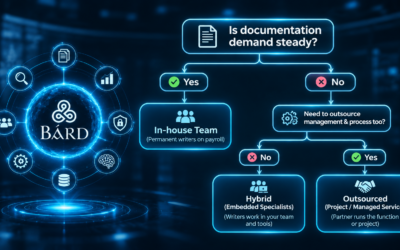
In-house vs outsourced technical writing: how to decide
The choice between in-house vs outsourced technical writing comes down to one question: is documentation a stable, ongoing function with steady demand, or does demand rise and fall with launches, migrations and backlogs? In-house teams win when the work is steady and...

Resolving terminology conflicts across enterprise teams
Different teams often use different words for the same thing. Product calls it an account. Sales calls it a customer profile. Support calls it a workspace. Operations still uses the name from the legacy system. Everyone understands the term inside their own team, but...

How to document business exceptions and non-standard processes
Most organizations have a standard way of working. They also have cases where the standard process does not fit. A major customer needs a different approval route. A legacy system cannot support the current workflow. A regional team has a legal or contractual...